Most annual appraisals still come down to one conversation and one form: the manager's. For a senior leader, that is a thin slice of the truth. Their team sees how they coach and decide; their peers see whether they collaborate or protect their turf. This article is for HR heads, CEOs and department leaders in Pakistan who want 360-degree feedback that people will answer honestly, and that leaders can actually use.
Why a Single Manager Can't See the Whole Leader
In many Pakistani companies, the annual appraisal is still the main formal view of a leader. It has a place: the line manager is closest to targets, budgets and delivery. But delivery is not the same as leadership.
The manager often sees the presentation, not the preparation, and the monthly numbers, not whether the team stayed late because the brief arrived late or because the leader cannot delegate. They may genuinely like the person they promoted, which makes the blind spots harder to spot, not easier.
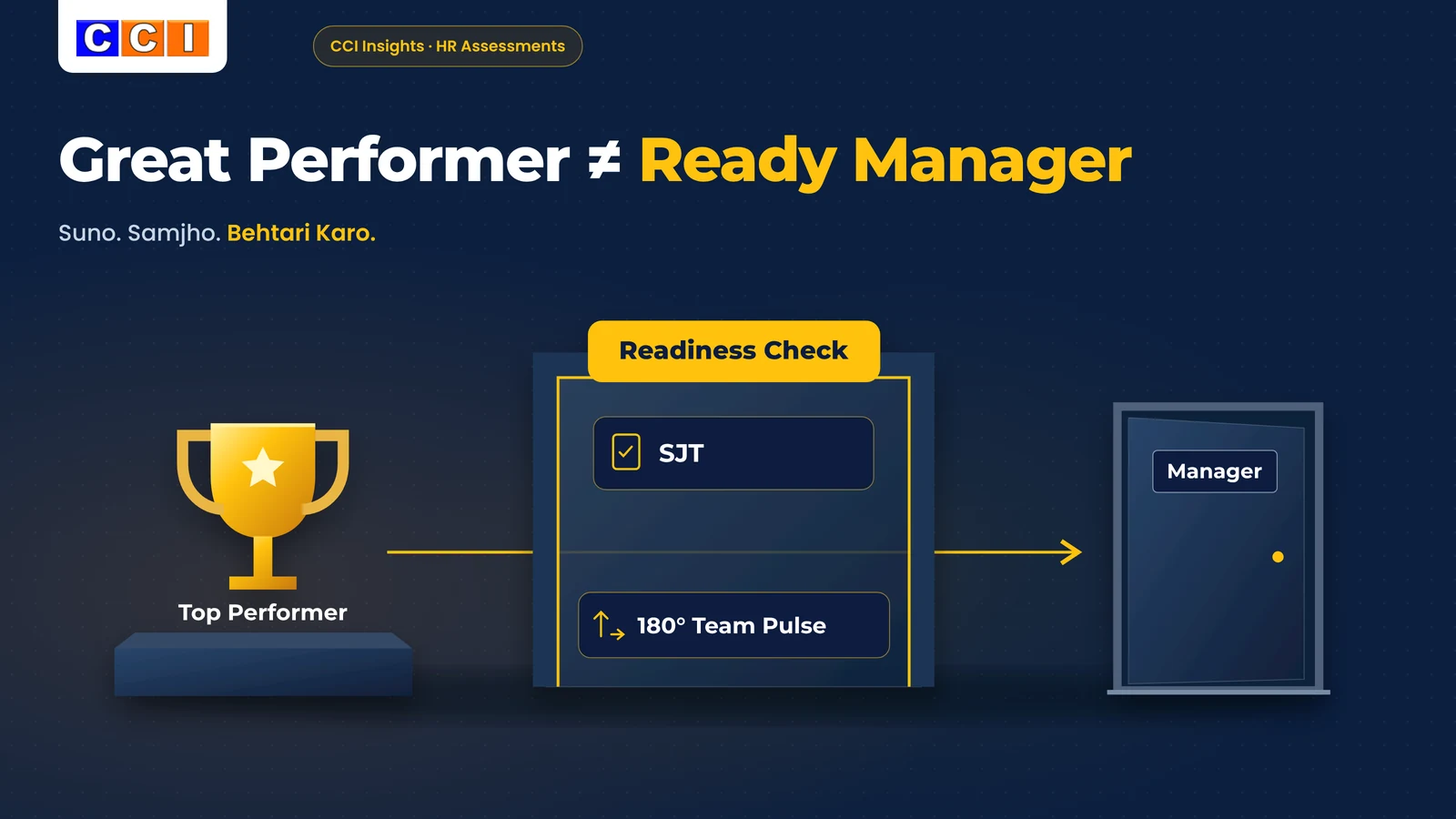
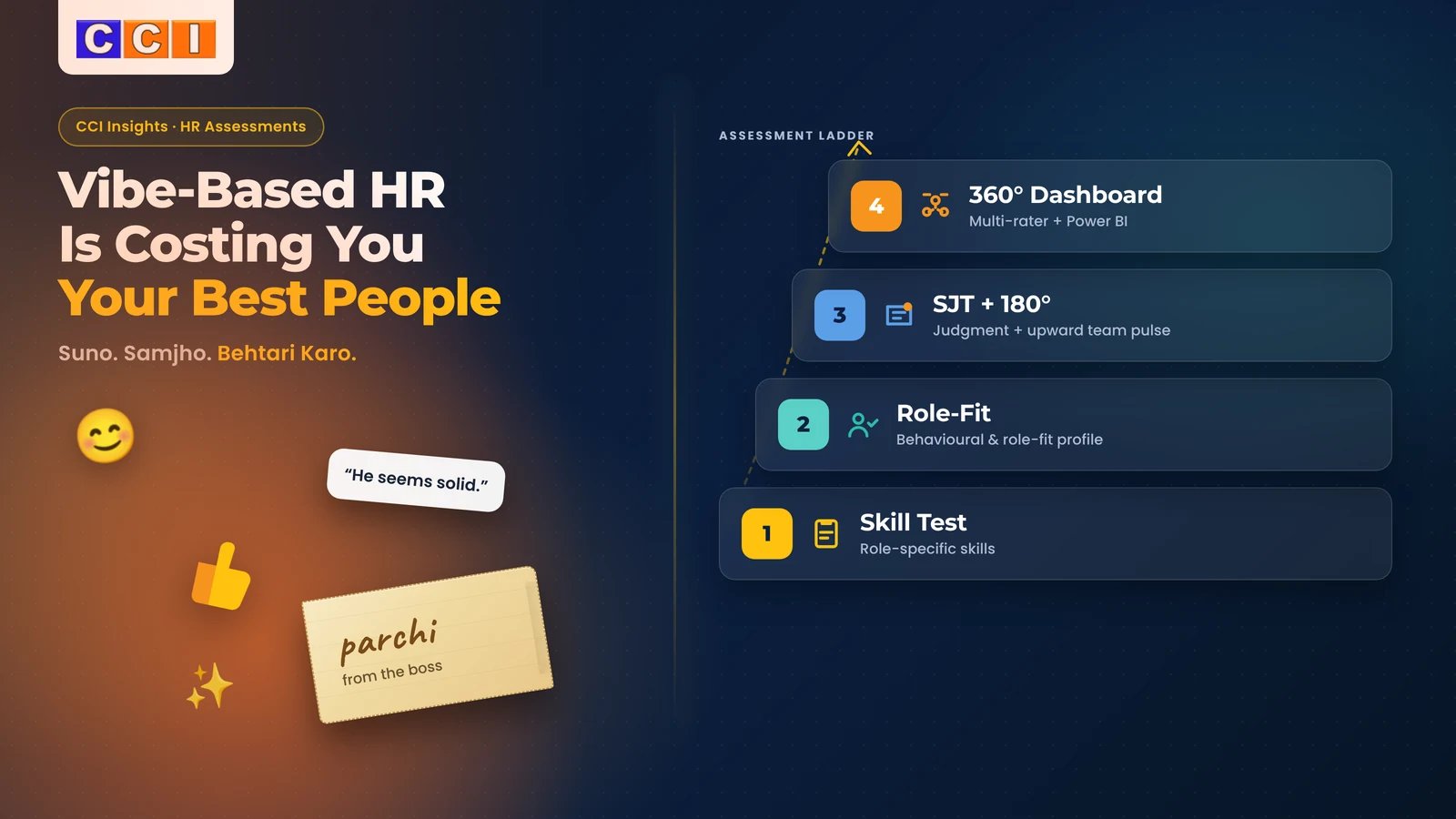
This is sharper in hierarchical workplaces. Upward honesty is rare when the same person controls the increment, the next posting, and whether a concern is treated as feedback or as disloyalty. Direct reports learn to stay polite. Peers stay careful. The leader hears that everything is fine, until a strong team member leaves with a resignation that says “better opportunity”. We looked at that quiet checkout in our piece on vibe-based HR, and at promotions made without a leadership check in Great Performer, Wrong Manager.
A 360-degree exercise is not a way to catch people out. It is a way to see the sides of a leader that a single rater cannot see.
What 360-Degree Feedback Actually Measures
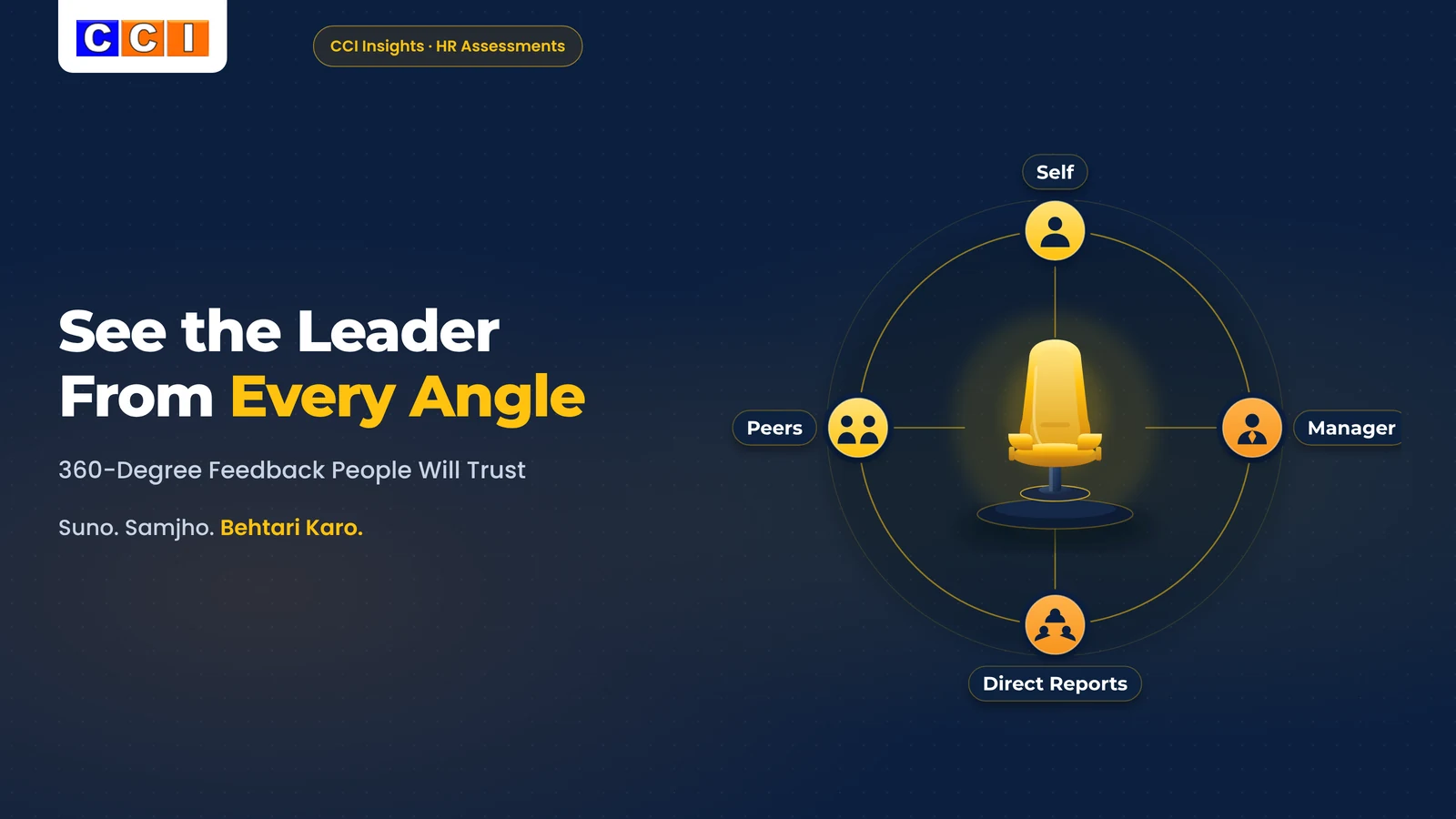
360-degree feedback is a structured, multi-rater view of how a leader works with other people. The leader rates themselves. Their manager, a group of peers, and their direct reports rate them on the same behaviours. Some programmes add other close stakeholders, but those four views are the core.
It is not a personality contest, and it is not a substitute for KPIs. You are asking about observable leadership behaviours: whether goals are clear, whether people are coached, whether decisions feel fair, whether the leader collaborates across departments, and whether the team feels supported when things go wrong. The useful output is the gap between the leader's self-view and everyone else's, and the differences between rater groups. A leader who rates themselves as a strong coach, while their reports do not, has something specific to work on.
It is not an annual appraisal. The appraisal judges contribution and results, usually from one manager, and often feeds increment and confirmation decisions. A 360-degree programme looks at how the person leads.
It is not a 180-degree upward pulse. A 180-degree check is a short set of questions answered by a supervisor's own team and compared with their self-rating. It is lighter, faster, and, as we set out in the promotion-readiness article, the right tool for first-time supervisors and branch leads in their first 90 days. A full 360-degree cycle adds the manager and peers, takes more coordination, and is better reserved for heads of department and senior leaders, which is how CCI uses it.
Use It for Development, Not as a Quiet Score for Pay
This is the decision that makes or breaks the programme.
When people believe the exercise is for the leader's development, they are more willing to be specific, and the leader is more willing to listen. When they suspect the scores will quietly decide an increment, a promotion or an exit, two things happen at once. Raters soften their answers, or they use the form to settle a score. The leader becomes defensive. Trust in the process, and often in HR, drops quickly.
That does not mean 360-degree feedback can never inform a bigger talent decision. Themes over more than one cycle can usefully sit alongside performance and a succession discussion. What does not work is launching a “development 360” and then using the first report as a verdict no one was told about.
Be explicit from the start. Tell leaders and raters what the programme is for, who will see the results, and what will not be decided on the back of a single report. CCI treats 360-degree feedback as a development tool, not a scoring exercise. That should be the default unless you have a clear, openly stated reason to do otherwise.
How to Design a 360-Degree Programme People Will Trust
A 360-degree programme fails less often because of the software than because people do not believe it is safe. The design choices that matter are consistent:
- A clear purpose, and a clear cohort. It works best for HoDs and senior leaders, framed in writing as a development exercise, with an honest account of who will see the results and what a single cycle will not decide.
- A real anonymity threshold. The manager's view is usually identifiable; there is only one line manager. Peer and direct-report scores should not be shown unless enough people in that group have responded. A common rule is a minimum of three raters in a group. Comments that could only have come from one person should never be shared.
- A short list of observable behaviours, not an exhausting catalogue of virtues. Questions people can actually answer, such as “gives a clear brief before a task” rather than “is a visionary leader”. Typical completion time, when the form is kept short, is around 10–15 minutes per rater; that figure is indicative and depends on the questionnaire.
- A balanced rater mix: people with enough recent working contact, not only allies, and not a critic who barely shares a meeting.
- A calibrated debrief and an action plan. A PDF in an inbox is not a programme. The leader needs a facilitated conversation — strengths first, then the gaps between self and others, then two or three development priorities — and a later check-in so the report does not end up in a drawer.
Knowing what good design looks like is the easier part. Running it from inside the company is where trust usually breaks. In a hierarchical Pakistani workplace, people are already cautious about upward honesty. If the form lives on a company drive, if HR or IT can open the file, or if the boss can ask who said what, raters assume their answers are not really anonymous. They soften the scores or skip the comments, and the report tells the leader what they already believed.
That is why organisations bring in an independent partner. CCI Pakistan administers the survey confidentially, so responses do not sit on an internal system the leader can ask about. It enforces anonymity thresholds before any group result is shown, facilitates a neutral debrief the leader can actually hear, and gives HR a live Power BI view of the cohort without exposing individual raters. Gaps that surface can then be connected to targeted training, rather than stopping at a score.
Mistakes That Kill Trust Overnight
- Running it for everyone. Officers, frontline staff and new supervisors usually need a lighter check, not a full multi-rater cycle.
- An exhausting questionnaire. A long form that raters rush through at the end of the day produces noise, not insight.
- Showing a “team” score based on one or two people. If the group is that small, the comments are no longer anonymous.
- Using the report to confirm a decision already made. People can tell when the exercise is theatre.
- Sharing comments that identify the writer, even accidentally.
- Tying the first cycle to increments without saying so up front.
- No debrief, no plan, no follow-up. A score with no next step is just more paperwork.
Any one of these is enough for the next cohort to treat the invitation as a formality.
Frequently Asked Questions
What is 360-degree feedback?
It is a structured way to compare a leader's self-view with confidential input from their manager, peers and direct reports on a shared set of leadership behaviours.
How is it different from 180-degree upward feedback or an appraisal?
An appraisal is usually the manager's view of results. A 180-degree upward pulse is a short team-only check, suited to first-time supervisors. 360-degree feedback adds peers and the manager, and is better reserved for HoDs and senior leaders.
Should we use 360-degree feedback for increments or promotions?
Use it first for development. If themes later inform succession or a promotion discussion, say so clearly, and never let a single cycle be the verdict.
Who should go through a 360-degree programme?
Typically heads of department and senior leaders. Other levels are better served by shorter role-specific skill tests, role-fit profiling, or an SJT with a 180-degree pulse, as we set out in the vibe-based HR article.
How do you keep responses confidential?
Responses should go to a party people trust, usually an independent administrator. Peer and report scores are only shown when a minimum number of raters in that group have answered, and comments are reviewed so a single person cannot be identified.
How long does a 360-degree cycle take?
It varies with the size of the cohort and how quickly raters respond. A typical programme, from nominating raters to the debrief, runs over a few weeks rather than a single day.
See the Leader From Every Angle
If you want a 360-degree programme your leaders will take seriously, it has to feel safe, specific and useful. CCI Pakistan designs and runs independent, confidential 360-degree feedback for HoDs and senior leaders, with individual reports and live Power BI dashboards for HR, and can help you turn the gaps into targeted training. Request a proposal and we will help you scope a programme that people will trust.
Suno. Samjho. Behtari Karo.